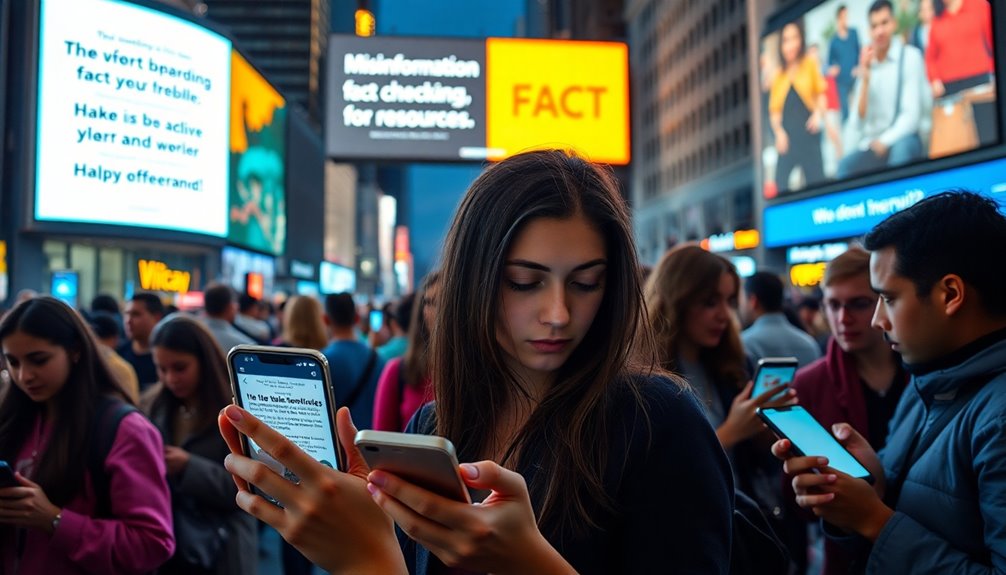

Social media considerably contributes to the spread of misinformation. Rapid content dissemination allows false claims to gain traction quickly. Cognitive biases, emotional triggers, and social influences propel users to share unverified information. Algorithms often amplify sensational content, whereas moderation struggles to keep pace. Nevertheless, social media likewise serves as a platform for combating misinformation through fact-checking initiatives and digital literacy programs. The ongoing evolution of these platforms will shape future efforts in addressing misinformation.
Article Highlights
- Social media platforms facilitate the rapid spread of misinformation through viral trends and unverified claims shared by users.
- Cognitive biases and emotional triggers increase users' likelihood of sharing misleading content without verification.
- Algorithms prioritize sensational content, often amplifying false information over factual narratives in users' feeds.
- Fact-checking initiatives and digital literacy programs aim to counter misinformation by verifying claims and educating users on identifying false information.
- Collaboration between social media platforms and credible sources enhances transparency and improves moderation efforts against misleading content.
The Mechanics of Misinformation on Social Media
Although social media platforms serve as vital channels for information dissemination, they likewise facilitate the rapid spread of misinformation. The mechanics of this phenomenon often involve the amplification of content through viral trends, where misleading or false information captures attention and spreads quickly. Users, motivated by engagement and shares, may unknowingly contribute to the problem by disseminating unverified claims. Fact checking initiatives are important in this arena, as they aim to counteract misinformation by verifying facts and providing accurate information. Nevertheless, the sheer speed at which content circulates can outpace these efforts. As a result, the combination of human behavior and platform algorithms creates an environment where misinformation thrives, challenging the integrity of information shared online.
Psychological Factors Behind Misinformation Sharing
Though individuals may not consciously intend to spread false information, various psychological factors greatly influence their sharing behavior on social media. Cognitive biases, such as confirmation bias, lead users to favor information that aligns with their pre-existing beliefs. Furthermore, emotional triggers play a significant role; content that evokes strong feelings—whether anger, fear, or joy—is more likely to be shared. These factors create a perfect storm for misinformation dissemination.
| Factor | Description | Impact on Sharing |
|---|---|---|
| Cognitive Biases | Preference for information that confirms beliefs | Increases likelihood of sharing false information |
| Emotional Triggers | Strong feelings elicited by content | Improves engagement and sharing rate |
| Social Influence | Peer dynamics affecting decision-making | Encourages sharing to fit in |
| Urgency | Time-sensitive information prompting quick responses | May lead to unverified sharing |
Case Studies: Viral Misinformation Campaigns
As social media platforms have evolved, they have become fertile ground for viral misinformation campaigns that can spread swiftly and widely. Notable case studies illustrate how these campaigns exploit public trust and emotions, leading to significant consequences.
- The 2016 U.S. presidential election and its numerous viral hoaxes
- Misinformation trends surrounding health crises, such as the COVID-19 pandemic
- The viral spread of false claims about climate change
- Online conspiracy theories gaining traction through social media
- The impact of celebrity endorsements on misinformation propagation
These examples highlight the urgency of addressing viral misinformation campaigns, as they can distort reality and influence public opinion, in the end undermining informed decision-making and trust in credible sources. The prevalence of confirmation bias complicates the public's ability to critically evaluate the information they encounter online.
The Role of Algorithms in Amplifying False Information
How do algorithms shape the scenery of information shared on social media? Algorithms, designed to maximize user engagement, often prioritize sensational or controversial content over factual information. This phenomenon, known as algorithm bias, can lead to the amplification of false information. As users interact more with sensational posts, algorithms reward this behavior by further promoting similar content, creating a feedback loop that distorts the information environment. Content moderation efforts, though crucial, can struggle against the sheer volume of posts and the speed at which misinformation spreads. As a result, this interplay between algorithm bias and inadequate content moderation can facilitate the rapid dissemination of false narratives, complicating efforts to achieve an informed public discourse in the digital age.
Strategies for Combatting Misinformation on Social Media
Addressing misinformation on social media requires a multifaceted approach that counters the effects of algorithm bias. Effective strategies can include:
- Implementing robust fact checking initiatives to verify information before dissemination.
- Promoting digital literacy programs that educate users on identifying false information.
- Encouraging community engagement to nurture discussions around credible sources and facts.
- Collaborating with social media platforms to improve transparency in algorithmic processes.
- Utilizing influencers and trusted figures to disseminate accurate information within their networks.
Additionally, fostering strong online presence can enhance the reach of credible information and combat the spread of misinformation. These strategies collectively aim to create a more informed public, empowering users to critically evaluate the content they encounter. By prioritizing fact checking initiatives and nurturing community engagement, the fight against misinformation can become more effective and sustainable over time.
The Future of Social Media in the Fight Against Misinformation
As the terrain of social media continues to evolve, its role in combating misinformation is becoming increasingly critical. The future is likely to see improved collaboration among platforms, amplifying fact-checking initiatives to guarantee that users are exposed to accurate information. Social media companies may implement advanced algorithms to flag misleading content, whilst partnering with independent fact-checkers to promote transparency. User education will play a pivotal role, with platforms developing tools and resources that empower users to critically assess the information they encounter. By cultivating a culture of responsibility and vigilance, social media can evolve from a channel that spreads misinformation to one that actively combats it, ultimately contributing to a more informed society.
Frequently Asked Questions
How Do Different Social Media Platforms Handle Misinformation Policies?
Different social media platforms have varying approaches to misinformation policies. Some implement fact-checking measures to verify content accuracy, whereas others prioritize user reporting. Platform transparency plays an essential role, as companies often release reports detailing their efforts and outcomes in combating false information. These strategies aim to create a safer online environment, even if effectiveness can vary, leaving users to navigate a terrain where misinformation continues to challenge the integrity of shared information.
Can Misinformation Impact Social Media User Behavior and Engagement?
Studies reveal that 64% of users have altered their social media habits as a result of encountering misinformation. This statistic illustrates the profound impact misinformation can have on user behavior, leading to decreased engagement metrics. As users grapple with the effects of misinformation, their trust in platforms diminishes, prompting them to disengage or seek alternative sources. As a result, the cycle of misinformation undermines user trust, greatly influencing how individuals interact with social media overall.
What Role Do Influencers Play in Spreading Misinformation?
Influencers profoundly impact the dissemination of information, as their large followings often view them as credible sources. Nevertheless, this influence comes with a responsibility known as influencer accountability. When influencers share misleading information, they can erode audience trust, leading to skepticism about future content. As a result, their role becomes essential in shaping perceptions, as followers may unknowingly adopt false narratives based on the influencers they admire and engage with regularly.
How Does Misinformation Affect Public Trust in Media?
Misinformation can create a chasm between truth and perception, leaving audiences feeling bewildered. As claims spread unchecked, media credibility suffers, leading to trust erosion among the public. People begin to question the reliability of news sources, encouraging skepticism that undermines informed decision-making. This growing doubt not just complicates the relationship between the media and the public but similarly threatens the very foundation of democratic discourse, where accurate information is crucial for engagement.
Are There Legal Ramifications for Spreading Misinformation on Social Media?
The question of legal ramifications for spreading misinformation on social media has garnered significant attention. Various jurisdictions may impose legal consequences, including fines or penalties, on individuals or organizations that disseminate false information. Misinformation penalties can vary widely, depending on the nature of the content and its impact on public safety or trust. As laws evolve, comprehending these legal frameworks becomes crucial for social media users to navigate potential risks associated with sharing unverified information.